

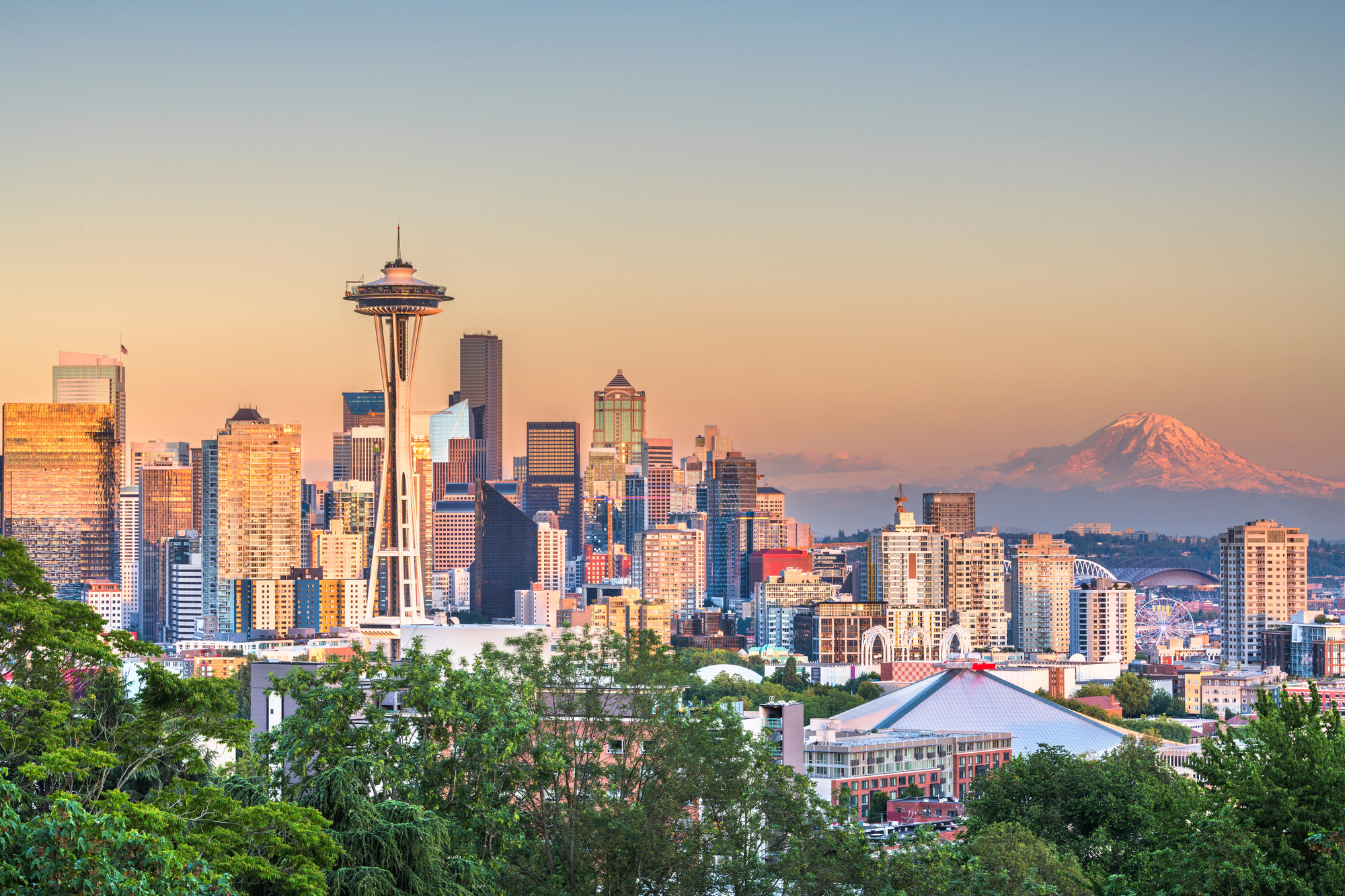
Seattle Commercial Real Estate Market Update
19 Nov 2025Seattle Commercial Real Estate Market Update — Property Types, Financing, Recent Fundings, and Future Developments
Executive summary
- Seattle’s commercial real estate (CRE) market is stabilizing after pandemic-era shifts. Office demand remains mixed, industrial and life sciences sectors are strong, multifamily is steady with selective new supply, and retail is reinventing toward experiential and service uses.
- Capital markets show differentiated risk pricing: debt is available but more conservative; equity providers target core-plus, value-add, and specialized sectors (industrial, life sciences, last-mile logistics).
- Recent notable financings reflect investor confidence in industrial, life sciences, and well-located multifamily; office deals are rarer and often include repositioning capital.
- Near-term development pipeline emphasizes life sciences, lab conversions, industrial last-mile, transit-oriented multifamily, and selective office-to-residential/creative office conversions.
Market by property type
Office
- Demand: Sublet inventory and hybrid work continue to pressure traditional downtown office. Tenants favor efficient, amenity-rich space in trophy or well-located creative buildings; secondary offices face higher vacancy and concessions.
- Leasing trends: Longer-term commitments are focused on flexibility — smaller footprints, amenity-rich suites, and flexible lease terms. Tech tenants are selective; life sciences and professional services pick specific downtown and South Lake Union locations.
- Capital: Lenders require higher DSCR/loan-to-value, higher spreads, and cautious valuations; bridge and mezzanine capital used for repositioning and conversions.
- Outlook: Expect continued selective redevelopment, office-to-residential or lab conversions, and more landlord concessions for secondary product.
Industrial / Logistics
- Demand: Strong, driven by e-commerce, regional distribution, and last-mile needs. Seattle’s constrained land and zoning make infill industrial especially valuable.
- Rents and occupancy: Low vacancy and rising rents for modern distribution, small-bay logistics, and cold-storage where relevant.
- Capital: Strong investor appetite; stable cashflows attract both debt and equity, including institutional buyers and private REITs.
- Outlook: Continued development of last-mile facilities near population centers and freight nodes (e.g., near Port of Seattle, I-5/I-405 corridors).
Life Sciences and Labs
- Demand: Rising, particularly in South Lake Union, Eastlake, and certain neighborhoods near major research hospitals and universities. Lab-ready space is at a premium.
- Development: Conversions and new lab projects are prioritized; pre-leasing and sponsor-backed equity often critical to secure financing.
- Capital: Specialized lenders and life-science-focused funds provide equity and debt, often with higher cost but more patient capital.
- Outlook: Growth continues, with clustering around research institutions and transit-accessible nodes.
Multifamily
- Demand: Steady renter demand, though new supply in some submarkets is pushing concessions. Higher mortgage rates tempered investor yields, but multifamily remains a core asset class.
- Pricing: Class A retains premium; value-add opportunities targeted in B/C properties for repositioning.
- Capital: Strong competition for stabilized assets; construction lending tighter but available for projects with pre-leasing or strong sponsor track records.
- Outlook: Transit-oriented and mixed-use multifamily near light rail and major nodes will attract most investment.
Retail
- Demand: Polarized — grocery-anchored and experiential retail perform well; strip centers with service-oriented tenants (medical, fitness, personal services) remain resilient. Traditional apparel-centered malls face challenges.
- Capital: Lenders and investors prefer anchored centers and properties with value-add re-tenanting strategies.
- Outlook: Adaptive reuse and neighborhood-serving retail will expand; last-mile fulfillment and dark store conversions may grow.
Financing environment
- Debt markets: More disciplined — higher interest rates and tighter underwriting (lower LTCs, higher DSCR). CMBS issuance is selective; life companies and banks compete for high-quality assets. Construction lending requires stronger sponsor equity and pre-leasing.
- Equity markets: Institutional and private equity remain active but selective. Core/core-plus deals see competitive pricing; value-add requires clear execution plans and sponsor experience.
- Alternative capital: Opportunity funds, family offices, and foreign capital are active in niche sectors (industrial, life sciences, multifamily). EB-5 and cross-border capital have slowed relative to prior cycles but still contribute selectively.
- Loan products: Bridge and mezzanine loans for repositioning; construction-to-perm for pre-leased lab and multifamily; sale-leaseback transactions for industrial/logistics.
Recently funded notable deals
Note: These are illustrative deal types reflecting recent market activity rather than a comprehensive list of transactions.
- Large industrial portfolio financing — institutional loan syndicate provided long-term financing for a distribution campus serving Puget Sound e-commerce operations. Theme: investor appetite for last-mile near population centers.
- Life sciences lab campus — sponsor equity plus specialized construction debt closed on a new lab building near South Lake Union, with partial pre-leasing to research tenants. Theme: premium for lab-ready product and sponsor experience.
- Value-add multifamily acquisition — regional developer closed an acquisition with a bridge-to-perm loan to renovate a B-class asset near a light rail station. Theme: repositioning near transit remains attractive.
- Office conversion financing — construction and mezzanine financing provided to convert an underperforming suburban office into creative office/residential hybrid. Theme: adaptive reuse of office stock.
- Grocery-anchored retail refinancing — recapitalization of neighborhood center with long-term fixed-rate financing from a life company. Theme: flight to quality in retail assets.
Future developments and pipeline
- Life sciences clusters expansion: Continued lab development around South Lake Union, Eastlake, and near UW/medical campuses, including conversions of older office buildings to lab space where structurally feasible.
- Industrial infill and last-mile: Small-bay logistics and micro-fulfillment centers closer to dense neighborhoods and port facilities.
- Transit-oriented mixed-use: Multifamily and ground-floor retail/micro-office developments near new light rail stations and mobility hubs.
- Office repositioning: Expect more conversions to residential, lab, or creative office with amenity upgrades. Municipal incentives and zoning updates may accelerate conversions.
- Sustainability and resilience retrofits: Growing capital directed to energy-efficiency upgrades, seismic retrofits, and resiliency measures — a deciding factor for lender underwriting and tenant demand.
- Tech and biotech clustering: Continued clustering of R&D and high-tech employers in specific hubs — will drive selective office/lab demand and support surrounding retail and multifamily.
Risks and catalysts
- Interest rates and capital availability: A sustained higher rate environment would pressure valuations, especially for office and assets relying on arbitrage financing.
- Office demand normalization: If remote/hybrid patterns stabilize at lower in-office occupancy, downtown office fundamentals could remain challenged longer, accelerating conversions.
- Economic and tech sector employment trends: Local tech layoffs or hiring cycles can swiftly affect office and multifamily demand in targeted submarkets.
- Regulatory and zoning changes: City policies around housing, zoning, and ADUs may influence conversion economics and pipeline timing.
- Supply chain and construction costs: Elevated construction costs and labor availability can delay projects or compress returns.
Implications for investors, owners, and developers
- Investors: Favor sectors with durable demand (industrial, life sciences, stabilized multifamily). Underwrite conservatively for office exposure or insist on clear repositioning plans.
- Owners: For office landlords, assess conversion potential and invest in tenant-experience amenities. Industrial and lab owners should prioritize modernization and sustainability to maintain premiums.
- Developers: Target transit corridors, last-mile industrial nodes, and lab-ready product. Secure pre-leases where possible and structure financing with flexible capital partners.
- Lenders: Focus on strong sponsors, proven cashflows, and assets with adaptive reuse potential or differentiated tenant bases.
Alpha Funding Corp
Seattle’s commercial real estate market is increasingly segmented, with industrial, life sciences, and select multifamily assets offering the most resilient investment opportunities. Office remains challenged, requiring creative repositioning strategies and selective capital deployment. While financing is still accessible, lenders are more cautious—favoring sponsors with strong track records, pre-leasing commitments, and clear sustainability or resiliency plans.
In this environment, Alpha Funding Corp plays a vital role as Seattle hard money lenders and conventional commercial lender. Known for its agility in structuring bridge loans and multifamily financing, Alpha Funding Corp provides flexible capital solutions where traditional lenders may hesitate. Their offerings span from short-term bridge financing for value-add and transitional assets to conventional debt for stabilized properties, making them a go-to partner for developers navigating office conversions, last-mile industrial builds, and transit-oriented multifamily projects.

No Comments