

Jacksonville 2026: Your Strategic CRE Investment Guide
15 Jul 2026The Jacksonville Value Play: Strategic Commercial Real Estate Investing in Jacksonville
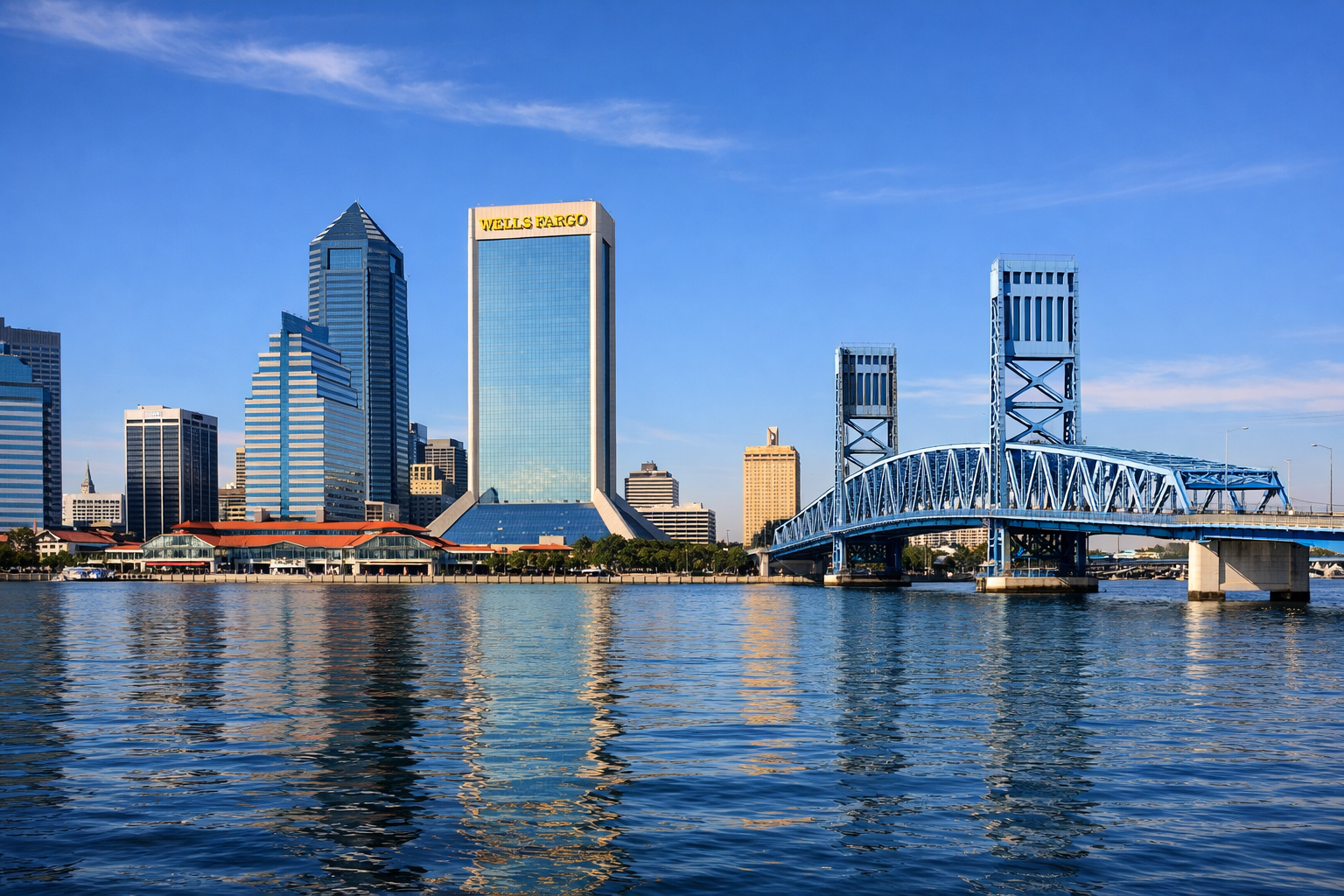
Strategic commercial real estate investing in Jacksonville is entering a new phase in 2026. For years, investors treated the city as a backup option behind Miami, Orlando, and Tampa. That view is changing fast. New state laws, a wave of tax relief, and a massive development pipeline are turning heads. Together, these shifts are reshaping how sophisticated capital views the city. This brief breaks down why 2026 marks a turning point for Jacksonville commercial real estate.
Structural Innovation: The Florida Series LLC Act
Florida’s business landscape just got a major upgrade. Lawmakers passed new legislation adding Protected Series LLC provisions to the state’s LLC statutes. The law takes effect on July 1, 2026. It gives investors a new way to structure growing portfolios.
Here’s how it works. Investors can now form multiple internal series within a single parent LLC, instead of setting up separate legal entities for each property. Each series can hold its own assets, members, and liabilities. Most importantly, one series generally cannot be held responsible for the debts of another series or the parent company. That means fewer filing fees, less paperwork, and simpler portfolio management. Still, this protection is not automatic. Owners must keep clear, separate records for each series, or the liability shield could fail. For investors scaling across multiple Jacksonville properties, this structure could meaningfully cut administrative overhead.
The 2026 Tax Advantage: Repealed Rental Taxes and Assessment Caps
Florida just removed a tax that made it an outlier among all fifty states. As of October 2025, the state fully repealed its sales tax on commercial property rentals, along with any local surtaxes. This applies broadly. Office space, retail units, warehouses, and self-storage rentals are all included. For tenants and landlords alike, this lowers occupancy costs right away.
There’s more relief potentially on the way. Florida voters will decide this November on a measure that could lower the annual assessment cap on commercial and other non-homestead properties from 10 percent down to 5 percent. This part of the plan has not passed yet. It needs a strong majority of voter support, and if approved, most changes would begin in 2027. Still, the direction is clear. If it passes, long-term holders in a growing market like Jacksonville stand to benefit from steadier, more predictable tax growth over time.
Why Jacksonville Is the “Yield Premium” Choice
Investors chase returns, and Jacksonville is delivering them. Compared to Orlando and Tampa, Jacksonville often trades at a noticeable yield premium. Buyers can typically capture higher cap rates here for comparable asset classes. That gap reflects Jacksonville’s earlier stage of institutional discovery.
This matters for portfolio strategy. Higher going-in yields give investors more room to absorb rate shifts or unexpected costs. They also create upside potential as the market matures and cap rates compress toward those of its tighter Florida peers. In short, buying into Jacksonville today may offer a better entry point than buying into an already-priced market.
Catalytic Urban Core Milestones: From Vision to Reality
Big projects are reshaping downtown Jacksonville. The riverfront Four Seasons development and the first phase of the Pearl Street District are both targeting major 2026 milestones. These aren’t small renovations. They represent long-term commitments from major developers who see real upside in the urban core.
Why does this matter for investors? Population density drives retail and service demand. As downtown living becomes more attractive, more residents move in. Many analysts point to a 10,000-resident threshold as the tipping point where retail, dining, and service businesses become self-sustaining. Jacksonville is edging closer to that mark. Each new residential tower and mixed-use project pushes the city nearer to that critical mass.
International Capital Strategies
Foreign investors have specific reasons to look at Florida, and Jacksonville in particular. First, there’s no state income tax. That alone sets Florida apart from many competing U.S. markets. Second, bonus depreciation remains a powerful tool for offsetting taxable income on qualifying commercial assets, which can meaningfully improve after-tax returns.
Structure matters just as much as strategy. Many international buyers use Florida LLCs to hold real estate, which can help manage compliance with federal rules governing foreign investment in U.S. property. A like-kind exchange is another common tool. It allows investors to defer capital gains taxes by rolling proceeds from one property into another. None of this replaces professional tax or legal advice. But together, these tools give international investors a clearer, more efficient path into the U.S. market through Jacksonville.
The Logistics Anchor: JAXPORT and Port Expansion
Every strong real estate market needs an economic engine, and Jacksonville has one in its port. JAXPORT is Florida’s largest container port, and it anchors a huge share of the region’s industrial and logistics activity. This isn’t a seasonal driver. It’s a structural one, tied to shipping lanes, manufacturing, and national supply chains.
Recent momentum adds to the case. New federal grants aimed at waterfront infrastructure are flowing into the region in 2026, supporting upgrades that keep the port competitive. Major industrial projects are expanding the surrounding footprint too. For investors focused on industrial and logistics assets, this port activity offers a level of demand stability that’s hard to find elsewhere in the state.
The Roundup for Strategic Commercial Real Estate Investing in Jacksonville
Jacksonville’s story in 2026 isn’t about hype. It’s about fundamentals lining up at once. The new Series LLC framework gives investors a smarter, leaner way to hold multiple properties. The rental tax repeal has already lowered costs across the board, and a possible reduction in the assessment cap could add long-term predictability. Cap rates remain attractive relative to Tampa and Orlando, while billions in downtown development push the urban core toward self-sustaining density.
Add in a deep-water port with expanding federal backing, and the picture becomes even more compelling. Jacksonville is no longer a fallback option for investors priced out of Miami or Orlando. It’s becoming a primary destination in its own right. For investors willing to move early, the window may not stay this favorable for long.
About Alpha Funding Corp
As one of the trusted bridge loan lenders in Jacksonville Florida investors turn to, we provide fast, flexible funding that lets buyers secure properties before they’re gone. We also offer bridge loans in Miami Florida investors rely on to close quickly in one of the state’s most competitive markets. For asset-based financing without the delays of conventional underwriting, we provide hard money loans in Miami Florida to investors who need to move on short notice.
Across the region, we fund Tampa Bay hard money loans quickly so investors can act the moment the right opportunity appears. As Tampa Bay bridge loan lenders, we bridge the gap between purchase and permanent financing with terms built around real project timelines. In Orlando, we work as dependable Orlando hard money lenders for investors who value speed and certainty over red tape. Call us today.

No Comments